In my post "What is a Christian Book Editor's Job." I addressed a handful of issues I encountered in the early part of Nady Williams' book Cultural Christians in the Early Church. Most of the rest of the book was decent, but I ran into a few more major quibbles near the end.
Reflections of a bilingual Bible student (sometimes in English, sometimes in English and Spanish)
Monday, May 6, 2024
Friday, December 15, 2023
The Problematic Manifesto of Jonathan Cahn — Part 11
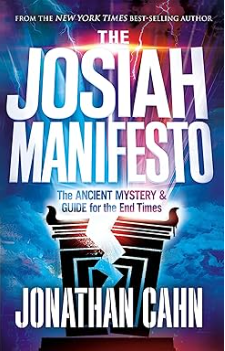
This is part 11 of a multi-part review and critique of Jonathan Cahn's latest book published in 2023. You can read Part 1 here, Part 2 here, Part 3 here, Part 4 here, Part 5 here, Part 6 here, Part 7 here, Part 8 here, Part 9 here, and Part 10 here
CONCLUSION
So at this point
you may be asking, “Brian, why did you take all the time and effort to read
this book, and then write a detailed critique?” Good question.
As I mentioned in
the first installment of this review, when pointing out errors in doctrine,
teaching, and interpretation of the Bible, I usually opt for simply dealing
with the erroneous teaching itself, and leave names out of it. After all,
discernment is about much more than simply having a list of approved and
disapproved authors and preachers. It’s about being able to tell when even a
normally sound and reliable teacher is off on a particular subject. But in this
case, since the first nine sections of Cahn’s book were all based on a faulty
interpretation of the biblical Jubilee, and since I have seen Cahn’s works recommended
more than once in the Pentecostal circles I am part of, I felt it imperative
that I address this particular book head-on. When the error is this basic in
its failure to exegete the Scriptures correctly, and is this pervasive in the
book in question, it is time to name names. The Apostle Paul warned Timothy
about Alexander the metalworker who had caused much harm, and called out Demas
for loving this present world (2 Tim. 4:10, 14–15), and names Hymenaeus and
Alexander who rejected the faith (1 Tim. 1:19–20).
As Dr. Vic Reasoner says in his review of The Josiah Manifesto posted on Amazon, “I agree with Cahn’s concerns about our culture, but not with his mishandling of Scripture.” I cannot in good conscience recommend Cahn as a reliable source when it comes to interpreting Scripture. To recommend his books to others, without substantive warnings about the problems his interpretations present, would be tantamount to tacitly approving of his hermeneutic, implying to others that Cahn’s methods are a proper way to read and interpret the Bible.
Wednesday, December 13, 2023
The Problematic Manifesto of Jonathan Cahn — Part 10
This is part 10 of a multi-part review and critique of Jonathan Cahn's latest book published in 2023. You can read Part 1 here, Part 2 here, Part 3 here, Part 4 here, Part 5 here, Part 6 here, Part 7 here, Part 8 here, and Part 9 here
MANIFESTO
I must admit, I
was greatly surprised when I got to this part of the book. For the most part,
the speculative language of sentences that start with “Could…” or “Is it
possible…” that pervade the earlier sections of the book are absent from this seven-part
manifesto. It literally felt like this part of the book was written by a
different author.
In the first part
of the manifesto, Cahn writes:
So too as American and Western civilization have turned away
from God and monotheism, in its place has risen a form of revived paganism. The
metamorphosis can be seen in its worship of nature, its deification of the
material world, its desanctification of life, its religious syncretism, its
moral relativism, its sexualization of popular culture, its abuse of life, its
fragmentation of reality, its worship of images, its embrace of alternate
spiritualities, and its overturning of biblical standards, values, and
precepts. (190)
I can shout a hearty, “Amen!” to that statement. And while it is saddening and perplexing to see this downturn in Western society, we shouldn’t be surprised by it. Jesus himself told us to expect such things as the time of His return draws closer. Also, if we look at the Greco-Roman world of the first century, we can see that in spite of facing all of these same difficulties, the early church “turned the world upside down” through proclamation of the gospel and faithful embodied witness (Acts 7:6). Many in the church today say they want to experience the power the early church saw. Maybe it will take facing what the early church faced (which is strikingly similar to what believers in the majority world are facing presently) to make us dependent on the Holy Spirit again.
Monday, December 11, 2023
The Problematic Manifesto of Jonathan Cahn — Part 9
This is part 9 of a multi-part review and critique of Jonathan Cahn's latest book published in 2023. You can read Part 1 here, Part 2 here, Part 3 here, Part 4 here, Part 5 here, Part 6 here, Part 7 here, and Part 8 here
PART
IX—THE BROKEN ALTAR
He then talks about the rebuilding of the Jerusalem Temple by the Jews returning from exile. According to the prophet Haggai, after a period of neglect, they returned to work on the rebuilding of the Temple on the twenty-fourth day of the sixth month (Hag. 1:15). Cahn calls this “the pivotal day, the turning point, the day of breakthrough and victory, when the strategies of the enemy were nullified, when the obstructions and war against God’s plans were overturned, and when the purposes of God prevailed” (161). He then goes on to talk about how the Dobbs decision was handed down on June 24, 2022—the twenty-fourth day of the sixth month. Elsewhere in the book, Cahn makes the effort to translate between the Gregorian and Hebrew calendars. Yet here, he just takes the numbers of the month and day from the Hebrew calendar uses them as a direct correspondence. He wants to “have his cake and eat it too,” using whatever calendar math will fit the conclusion he wants people to draw. This is numerology, not sound biblical interpretation.
Saturday, December 9, 2023
The Problematic Manifesto of Jonathan Cahn — Part 8
This is part 8 of a multi-part review and critique of Jonathan Cahn's latest book published in 2023. You can read Part 1 here, Part 2 here, Part 3 here, Part 4 here, Part 5 here, Part 6 here, and Part 7 here
PART
VIII—DAY OF THE TURNING
There were signs of something unique concerning The Return.
The sacred assembly called for in Joel takes place against the backdrop of a
plague that had come upon the land. So The Return would take place against the
backdrop of a plague on the land.
The context of the most famous of verses on national
repentance , 2 Chronicles 7:14, is this: “When I...send a plague among
my people, if my people, who are called by my name, will humble themselves and
pray...” Again, the conte4xt specifically mentioned a plague. We were
now in that context. The plague had come. Now it was time to humble ourselves
and pray. (136)
I certainly believe that God wants His people to humble themselves, pray, and turn from wickedness. But Cahn here seems to be equating the people of God with the modern nation-state of America. This is something he does in all his books, according to what I have seen others write in reviews of them. But the people of God is represented in the New Covenant by the Church—by those who literally are called by the name of Christ—Christians, as I wrote about here several years ago.
Thursday, December 7, 2023
The Problematic Manifesto of Jonathan Cahn — Part 7
This is part 7 of a multi-part review and critique of Jonathan Cahn's latest book published in 2023. You can read Part 1 here, Part 2 here, Part 3 here, Part 4 here, Part 5 here, and Part 6 here
PART
VII—CHILD OF THE NILE
Cahn then proceeds to point out that Amy Coney Barrett, Trump’s final appointee to the Supreme Court, was conceived and born in the middle of the “critical three-year window” between the introduction of legislation to legalize abortion in New York state and the Roe v. Wade decision. He claims that “without her coming onto the court at that exact time and without the casting of her vote as she did in the case of Dobbs v. Jackson, Roe v. Wade would never have been overturned” (127). He speculates that she was “likely conceived in the same month the case that would overturn Roe v. Wade would also arrive at the same court” (128). As for the month of Judge Barrett's conception, there was a 1 in 12 chance of her being conceived in the same month (but decades earlier) that Dobbs arrived at the Supreme Court. It is also interesting that since the month of her birth didn't line up nicely to fit Cahn's penchant for patterns, he had to go and guesstimate the month of her conception, so he could pin one more piece of red yarn on his wall connecting the events.
Tuesday, December 5, 2023
The Problematic Manifesto of Jonathan Cahn — Part 6
This is part 6 of a multi-part review and critique of Jonathan Cahn's latest book published in 2023. You can read Part 1 here, Part 2 here, Part 3 here, Part 4 here, and Part 5 here
PART
VI—THE APPOINTED DAYS
There are a few things we should note here. First, the death of the firstborn in Egypt wasn’t so much a plague like the previous judgments. Those took place over a period of time, after which Pharaoh had a chance to entreat Moses to pray to YHWH and ask Him to take away what was tormenting the Egyptians. , which took place over time, and . The death of the firstborn was an immediate, all-in-one-night, event, which could not be lifted afterward through an entreaty by Moses to YHWH. To compare the COVID pandemic, which grew in impact over time, to the death of the firstborn, which happened all in one night, is really not valid. As for Passover involving a lockdown, the “lockdown” in Egypt was only for the children of Israel, who were commanded to stay inside the homes marked with the blood of the Passover lamb on the doorposts. It wasn’t the whole nation of Egypt, and it wasn’t for an extended period. Again, Cahn picks broad things that at first glance may appear to support his narrative, but he conveniently ignores the finer details that cause his analogies to break down.
Sunday, December 3, 2023
The Problematic Manifesto of Jonathan Cahn — Part 5
This is part 5 of a multi-part review and critique of Jonathan Cahn's latest book published in 2023. You can read Part 1 here, Part 2 here, Part 3 here, and Part 4 here
PART
V—THE JUBILEAN REDEMPTION
Cahn puts the initial meetings of Norma Leah McCorvey (AKA Jane Roe) and Texas attorney Henry McCluskey as happening sometime in late January 1970, and then links that to the plague of COVID-19 arriving in late January 2020 (with language of a “Jubilee month”). He then goes on to link the initial filing of Roe v. Wade in the Texas court system in March 1970 with the March 2020 “state of emergency, lockdown, and paralysis” caused by COVID (92). I realize I’m starting to sound like a broken record, but the Jubilee was not about one event happening fifty years after another event. It was at the bottom of this page that I made a note that Cahn’s fixation on cycles sounds much more like a Far Eastern or Buddhist outlook on time than it does a Judeo-Christian one. (After I had read this section of The Josiah Manifesto, I read where Dr. Vic Reasoner points out the same thing in his article “The End-Times Theology of Jonathan Cahn” in the fall 2023 issue of The Arminian, Vol. 41, Issue 2. Reasoner writes, “Parallels do not prove that history is replaying. The circular view of history is pagan.”). And by this point, one begins to realize how much of this book must be discarded due to this repeated error. Even though some of the social issues Cahn deals with are certainly concerning and worthy of attention, his repeated abuse of the biblical idea of the Jubilee destroys any shred of credibility he may have possessed.
Friday, December 1, 2023
The Problematic Manifesto of Jonathan Cahn — Part 4
This is part 4 of a multi-part review and critique of Jonathan Cahn's latest book published in 2023. You can read Part 1 here, Part 2 here, and Part 3 here
PART
IV—JEHU AND THE TEMPLE OF BAAL
In 1 Corinthians 10, the apostle Paul
writes of the fall and judgment of the ancient Israelites. Then he adds, “Now
all these things happened to them as examples, and they were written for our
admonition…”
Behind the English word examples is the Greek word tupos.
Tupos can also be translated as a pattern, a model, a template, a
prototype. In other words, what happened to ancient Israel as recorded in the Scriptures
happened and was recorded as examples, as patterns for future generations. (69)
First off, the standard transliteration of the Greek word τύπος is typos, not tupos. The Greek letter upsilon, unless it is followed by another vowel, is transliterated with the English letter y in every standard textbook of biblical Greek I am familiar with. Secondly, according to most books and articles about biblical interpretation, typology is about persons or events in the Old Testament foreshadowing persons or events in the New Testament (and usually the inspired NT writers point out the correspondence between the OT type and the NT antitype). But the use of typology is restricted to the biblical canon. We are not free to look at an Old Testament person or event and say that it was a pattern or template for something happening in our modern age, in a nation that is not God’s covenant people (no matter what Cahn and others try to claim about the geopolitical United States being in some sort of covenant relationship with God).
Wednesday, November 29, 2023
The Problematic Manifesto of Jonathan Cahn — Part 3
This is part 3 of a multi-part review and critique of Jonathan Cahn's latest book published in 2023. You can read Part 1 here and Part 2 here
PART
III—THE WINDS OF HINNOM
Cahn makes
reference to President Lincoln’s linking the blood shed by both Union and
Confederate soldiers in the Civil War to the blood drawn from slaves by the
lash of the whip. He goes on to write:
So in view of the fact that the Scriptures identify the killing of children as among the most grievous of evils and one that especially invokes national judgment, and in view of the fact one of these judgments is that of a plague or disease—we must apply Lincoln’s question to the plague that came on America and the world. Could it have come in the context of judgment? And as in the case of ancient Israel, could such a judgment be linked to the blood of its children? (40-41)
Monday, November 27, 2023
The Problematic Manifesto of Jonathan Cahn — Part 2
This is part 2 of a multi-part review and critique of Jonathan Cahn's latest book published in 2023. You can read Part 1 here.
PART
II—ISLAND OF MYSTERIES
The first "Jubilee" Cahn writes about concerns Felix, the leader of the Spanish-language ministry at Cahn’s New Jersey congregation, Beth Israel. Cahn had invited Felix to be his interpreter on a ministry trip to Cuba. The theme of the meetings Cahn was to lead was “¡El Jubileo Viene! The Jubilee Comes!” Cahn writes that it was only after they were on the Caribbean island that he discovered Felix himself was of Cuban descent. He had been born on the island, and his family had fled to the United States following Castro’s takeover of the nation. As they traveled across the island, they ended up on a farm, which they discovered was owned by Felix’s grandfather. Cahn writes, “In the ancient law of the Jubilee, God ordained that each shall return to his own possession. And now Felix had returned to his own possession….As was ordained in the Jubilee, he had come back to that which he had lost.” (19)
Was Felix’s visit to the farm that once belonged to his family a modern-day example of the biblical Jubilee? According to the Jubilee as outlined in the Torah, the person or family who had been forced to sell their lands out of economic necessity was supposed to actually take possession of the land again—to begin to live on and farm that land again. But Felix did not return to live on his ancestral land in Cuba. He was just there for a visit. So while in one sense he may have “returned to his possession”—the property that once belonged to his family—this was not an example of the Jubilee as set forth in Leviticus.
Saturday, November 25, 2023
The Problematic Manifesto of Jonathan Cahn — Part 1
This is a review and critique of a long book, with lots of errors to discuss, so this will be a multi-part series. Rather than waiting to start publishing the review after completely finishing writing it, I decided to go ahead and start releasing it in sections as I finish writing the review of each part of the book, using the author's own major section divisions.
Normally on this blog, when pointing out errant interpretations of Scripture or bad doctrine, I focus solely on the interpretation or teaching that is bad, and leave the name of the author/preacher/teacher out of it. It's not about the person, it's about the teaching.
But in this case, because the issue involves a writer who, according to reviews I have read of his other books, utilizes the same poor interpretive techniques in most, if not all, of his writings, and because the interpretive error is the very foundation of the book, I felt I had to choice but to make it clear who the perpetrator of exegetical malfeasance is, and to deal with the contents of the book by name.
Since 2011, with
the publication of The Harbinger, Jonathan Cahn has been a popular
author within Pentecostal and Charismatic circles. Part of his appeal seems to
be that he is a Jewish believer in Jesus (a Messianic Jew), and many people
seem to believe that his being a rabbi gives him some special insight or
authority when it comes to the interpretation of Scripture that Gentile
scholars of the Bible lack. Cahn has not been without his critics and
detractors over the years, though many of the criticisms against his books have
come from cessationists and others who generally attack any and all things
Charismatic. This may lead those within the Pentecostal/Charismatic camp to dismiss
the criticisms out of hand due to the sources from which they come.
Thursday, November 23, 2023
Never Trust a "Prophet" Who Lacks Basic Reading Comprehension
The following was posted on social media on November 20, 2023, by the resident "prophet" at a well-known California church:
The Law of Faith
Everything in the spirit realm works by the law of faith whether someone is operating from the dark side (the second heaven) or from God’s Spirit (the third Heaven). In fact, what gravity is to the natural realm, faith is to the spirit realm. The Hebrew writer described it like this, “Now faith is the assurance of things hoped for, the conviction of things not seen.” (Hebrews 11:1) He went on to say, “By faith we understand that the worlds were prepared by the word of God, so that what is seen was not made out of things which are visible.” (Hebrews 11:3)This is profound; the invisible became visible by the force of faith. This means that the way we transfer things from the third Heaven to the visible world is through the law of faith. This is spiritual intelligence – the revelation of the way things transfigure from spiritual hypotheses to tangible dynamic realities.Faith is the foundation of spiritual intelligence! We have all heard the idiom, “That guy is so heavenly-minded that he is no earthly good!” Actually, the reason some spiritual people are of no earthly good is that they are dreamers with no faith. It’s faith that actualizes dreams, on-ramps visions, and overcomes visible obstacles!
Friday, September 1, 2023
Misappropriating Scripture for Partisan Purposes
I recently saw the following image shared by two Facebook friends on the same day (both of whom I knew growing up in church).
I've written before (here and here) about the importance of making sure we look at the actual context of a verse of Scripture before trying to take it and apply it to our own situations.
Saturday, August 20, 2022
The Dangers of Meme Theology
In the weeks and months after the U.S. Supreme Court's ruling in the Dobbs case, with the result being the reversal of Roe v. Wade, many of my fellow pro-life advocates have shared the following meme on social media:
The meme is somewhat clever, and it makes the point that an unplanned pregnancy is not necessarily a tragic thing.
The problem is, the meme is also false.
Thursday, August 13, 2020
Thoughts on Bible Interpretation / Pensamientos Acerca de Interpretación Bíblica
A personal rule that I have is to never base a point of preaching or teaching on the meaning of one word that is used in just one translation in English or Spanish. I should build on the meaning of the words used by the majority of the trustworthy translations, and not "go fishing" looking for a meaning that is only found in one translation.
---------------------------
Una regla personal que yo tengo es nunca basar un punto de predicación o enseñanza en el significado de una palabra que se usa en una sola traducción inglesa o española. Debo de basarme en el significado de las palabras usadas por la mayoría de las buenas traducciones, y no "ir de pesca" buscando un significado que solo se encuentra en una.